Black Seed (Nigella sativa)
Middle Eastern and South Asian — "the blessed seed" (Tibb-e-Nabawi tradition); seeds found in Tutankhamun's tomb
Evidence: Moderate (mixed) — 2024 meta-analysis across cardiometabolic outcomes
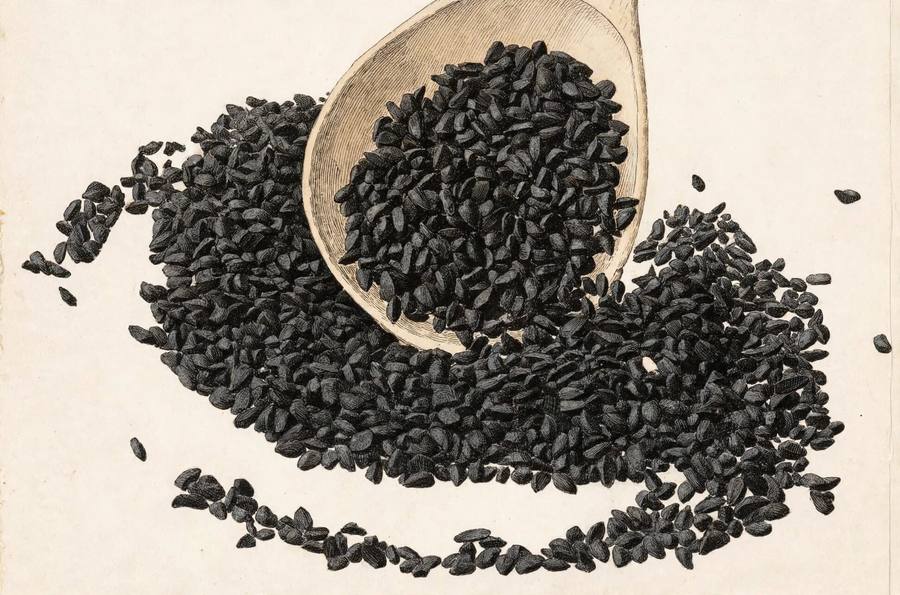
Illustration: Black seeds / kalonji (Nigella sativa)
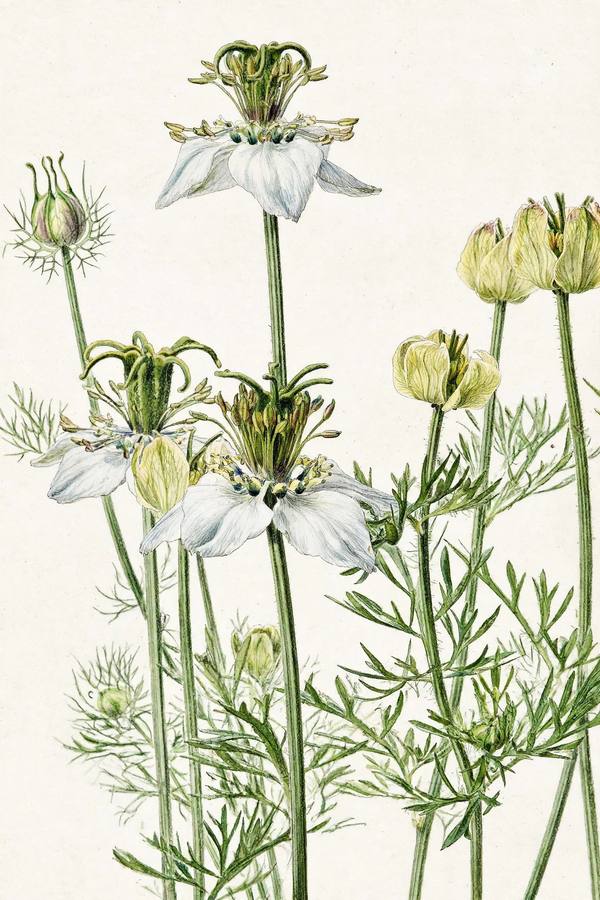
Illustration: Nigella sativa in flower
What it is and what it is used for
The small black seeds of Nigella sativa — kalonji — crushed, pressed for oil, or stirred into honey or milk. Traditional use covers a remarkable range; modern trials focus on cardiometabolic risk: a 2024 meta-analysis found triglycerides, total and LDL cholesterol, blood pressure, and fasting glucose all fell, while HDL rose.
Safety and disclaimers
- Avoid in pregnancy — uterine-contraction effects have been reported.
- Additive with glucose-lowering and blood-pressure drugs — monitor levels.
- Antiplatelet activity: bleeding risk, caution with anticoagulants.
- Interacts with CYP liver enzymes; stop about 2 weeks before surgery.
Recipe
Ingredients:
- Nigella sativa seeds (kalonji), 1–2 teaspoons
- Honey or warm milk (traditional carriers)
Preparation:
- Lightly crush or grind the seeds.
- Stir into a spoonful of honey or a cup of warm milk.
Dosage / directions: Trials used 1–3 g/day of seed powder or oil capsules. One to two teaspoons of seeds daily is the traditional food-level amount.
Folk history
Black seed is called 'the blessed seed' in the Tibb-e-Nabawi (Prophetic medicine) tradition, which holds that it cures everything but death. Seeds were found in the tomb of the pharaoh Tutankhamun, placed there for the journey to the afterlife. It flavored breads and pickles across the Middle East and South Asia for millennia before modern trials began measuring its effects on blood sugar and cholesterol.
Scientific references
- Milajerdi et al. 2024 — meta-analysis of Nigella sativa on cardiometabolic outcomes — https://ijns.sums.ac.ir/article_50314_988b16977ec3c4058b1771a0399aa452.pdf
- Consortium meta-analysis — blood pressure outcomes — https://cms.consortiumpublisher.com/Articals/698.pdf