Hawthorn for the Failing Heart (as an Adjunct)
European — hawthorn (Crataegus) leaf-flower tea for 'heart weakness,' a fixture of German phytotherapy
Evidence: Moderate (older trials) — Cochrane meta-analysis of 10 trials (n=855)
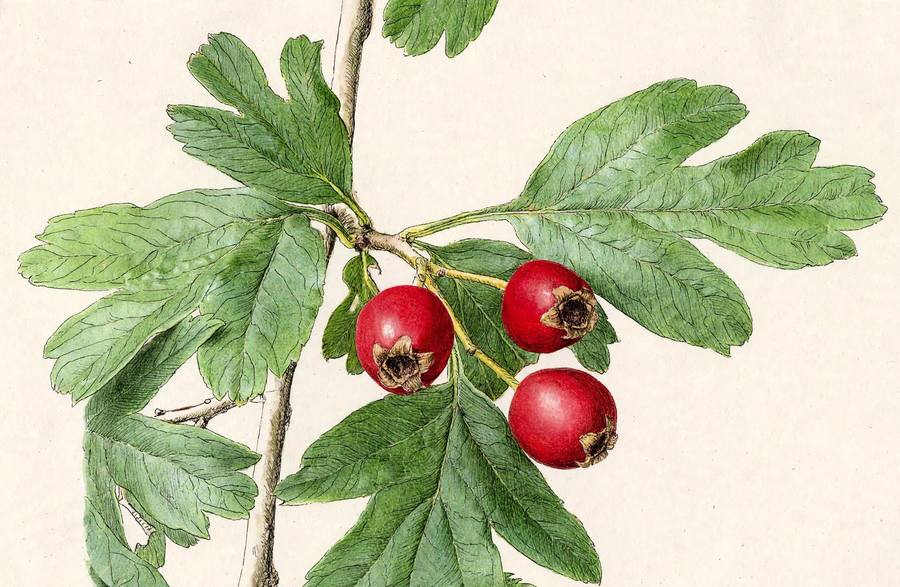
Illustration: Hawthorn berries / haws (Crataegus monogyna)
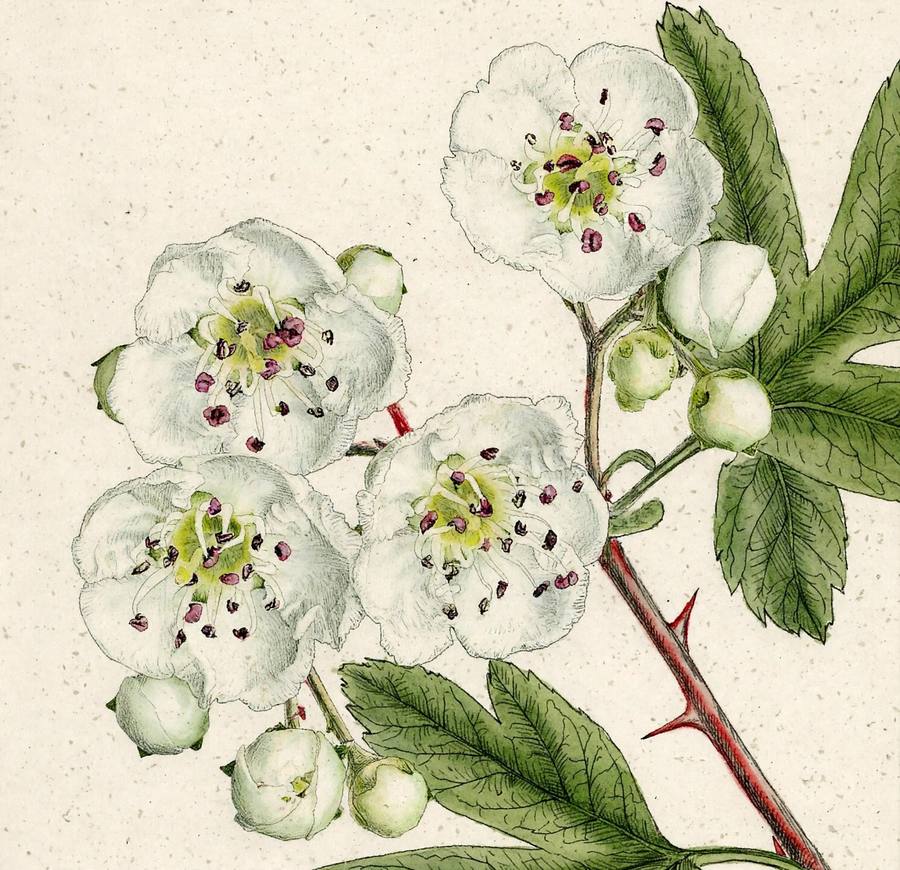
Illustration: Hawthorn blossom
What it is and what it is used for
Extract of hawthorn leaf and flower (Crataegus species), used as an adjunct in mild-to-moderate chronic heart failure. A Cochrane meta-analysis found that versus placebo, hawthorn increased maximal workload, improved exercise tolerance, and reduced breathlessness and fatigue. Side effects were infrequent, mild, and transient. Mortality was not studied.
Safety and disclaimers
- Do NOT use unsupervised — theoretical interactions with digoxin, beta-blockers, and other cardiac drugs.
- Never a substitute for guideline-directed heart-failure therapy.
- Mild nausea or dizziness reported.
- Use only under a cardiologist's supervision.
Foraging and preparing your ingredients
Warning: illustrations and photographs alone are never enough for safe wild identification. Confirm every plant in person with a knowledgeable local expert and at least two reliable field guides before harvesting or eating anything from the wild.
Where and when to find it: Hedgerows, woodland edges, and scrub across Europe and temperate North America. White blossom in May; red berries (haws) ripen in autumn.
Identification: Thorny shrub or small tree with deeply lobed leaves, clusters of white five-petaled flowers in spring, and red berries each containing a single hard stone in autumn. Compare with the captioned photos.
What to harvest: Flowering tops in spring; ripe berries in autumn (a frost sweetens them).
Dangerous look-alikes: Firethorn (Pyracantha) has similar red berries in clusters but narrow evergreen leaves. Confirm hawthorn by its lobed deciduous leaves and thorns. Never eat any wild berry you cannot positively identify.
Harvest sustainably: Take a portion of blossom and berries; leave plenty for birds, which depend on haws through winter.
Preparing and storing:
- Dry flowers and leaves quickly in a dark, airy place; store sealed up to 1 year.
- Use berries fresh, or dry/dehydrate them; remove stalks and store airtight.
- Berries make tea, tincture, or jelly.
Recipe
Ingredients:
- Dried hawthorn leaf and flower (Crataegus spp.), 1–2 teaspoons
- 250 ml (about 1 cup) boiling water
Preparation:
- Steep covered for 10–15 minutes, then strain.
Dosage / directions: Trials used standardized extracts (WS 1442 or LI132), not tea. Do not self-treat heart failure with hawthorn tea — discuss any use with your cardiologist.
Folk history
Hawthorn hedges marked the boundaries of European fields for centuries, and village herbalists gathered its blossoms for 'dropsy' and weak hearts. German phytotherapy kept it in the pharmacopoeia while other countries forgot it, and it remains one of the most studied European heart herbs — a folk remedy that earned a Cochrane review.
Scientific references
- Cochrane review — Pittler et al. 2008: hawthorn extract for chronic heart failure (10 trials, n=855) — https://www.medscape.com/viewarticle/789882