Goldenseal as an Antimicrobial Wash
Native American (Cherokee, Iroquois) — root for eyes, skin, and mucous membranes
Evidence: Traditional use — limited or no human trials
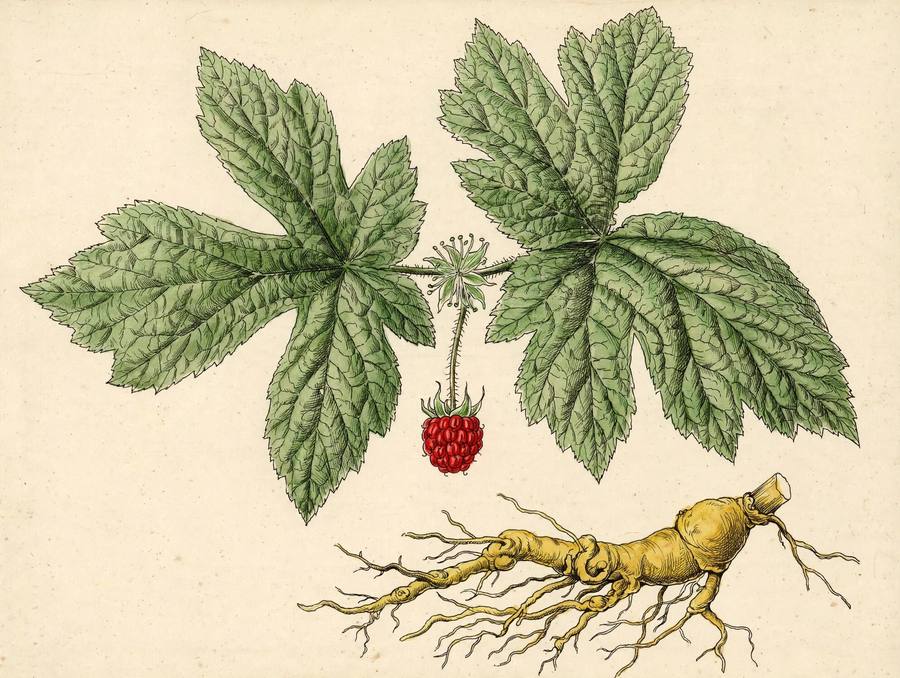
Illustration: Goldenseal (Hydrastis canadensis) with yellow rhizome
What it is and what it is used for
Goldenseal root (Hydrastis canadensis), used as a wash for eye irritation, mouth sores, and skin infections. Berberine gives it plausible antimicrobial activity in the lab, but human trials are thin — a small 1990s sinusitis study and cold/flu reviews that found no clear benefit. Included as traditional use with a conservation warning (see below).
Safety and disclaimers
- CONSERVATION: wild goldenseal is endangered from overharvesting — CITES Appendix II. NEVER buy wild-harvested; use cultivated only, or better, use Oregon grape (also berberine-rich) instead.
- Avoid in pregnancy (uterine stimulation) and nursing (jaundice risk in newborns).
- Drug interactions via CYP3A4/2D6.
Recipe
Ingredients:
- Cultivated dried goldenseal root, 1 teaspoon
- 250 ml just-boiled water
Preparation:
- Steep 15 minutes, strain well.
- Use cooled as an external wash or mouth rinse; do not swallow repeatedly.
Dosage / directions: External/mouth-rinse use, short term.
Folk history
Cherokee healers used it for arrow wounds and sore eyes; 19th-century Eclectic physicians made it a panacea, and demand nearly wiped it out. Its modern story is mostly a cautionary tale about loving a plant to death.
Scientific references
- NCCIH — Goldenseal (evidence summary) — https://www.nccih.nih.gov/health/goldenseal