Usnea (Old Man's Beard) as a Wound Lichen
Global folk medicine — the beard lichen on wounds and infections
Evidence: Traditional use — limited or no human trials
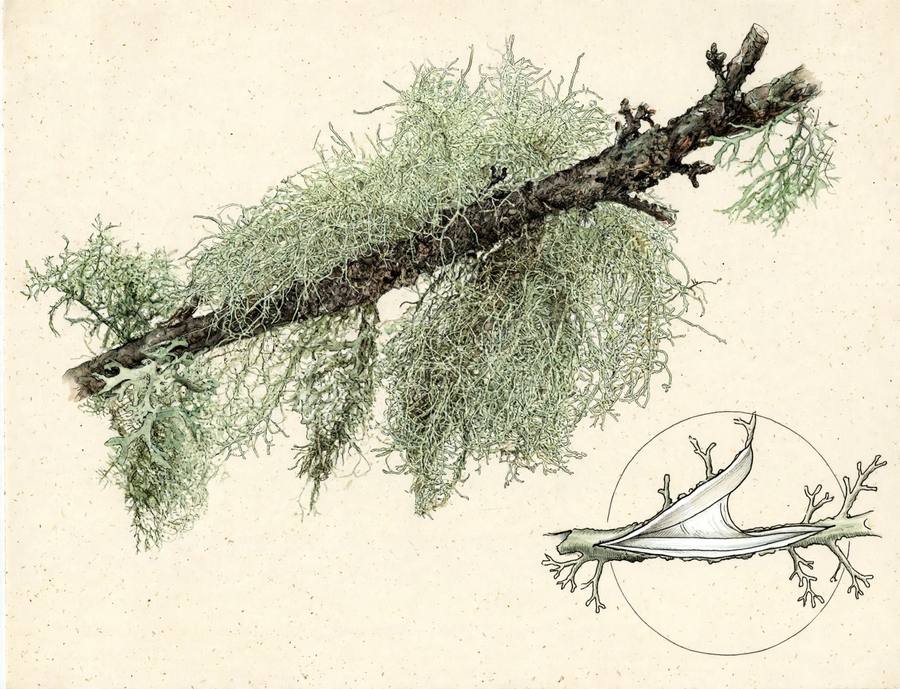
Illustration: Usnea beard lichen hanging from a branch
What it is and what it is used for
Usnea (Usnea spp.), the pale beard lichen hanging from forest trees, applied to minor wounds. Its usnic acid is genuinely antimicrobial in the lab (including against streptococci and staphylococci), and it has centuries of wound use across continents — but no human trials. A traditional-use entry with real chemistry behind it.
Safety and disclaimers
- For minor external wounds only.
- Oral usnic acid has caused liver injury — external use only, never internal.
- Harvest lightly — lichens grow extremely slowly; take only what you need from fallen branches.
- Be certain it is Usnea (elastic white core when you pull a strand apart) — other lichens differ.
Foraging and preparing your ingredients
Warning: illustrations and photographs alone are never enough for safe wild identification. Confirm every plant in person with a knowledgeable local expert and at least two reliable field guides before harvesting or eating anything from the wild.
Where and when to find it: Hanging from branches in clean-air forests, especially conifers and old hardwoods. Abundant after windstorms on fallen branches.
Identification: Pale green-grey beard lichen; pull a strand — Usnea has an ELASTIC WHITE CENTRAL CORD that stretches before breaking. Compare with the captioned plate.
What to harvest: Gather from fallen branches after storms — no need to pull from living trees.
Dangerous look-alikes: Other beard lichens (Alectoria, Bryoria) lack the elastic cord — harmless but not Usnea. Confirm the cord on every handful.
Harvest sustainably: Lichens grow extremely slowly; gather windfall only, and take modestly.
Preparing and storing:
- Rinse and pick out debris; dry at low heat.
- For tincture: cover with vodka 2–4 weeks, shaking daily; strain.
- External use only — oral usnic acid has caused liver injury.
Recipe
Ingredients:
- Clean Usnea lichen strands
- Hot water
Preparation:
- Soak or briefly simmer the lichen to soften.
- Apply as a poultice to a clean minor wound; cover.
- Alternatively, tincture in vodka 2–4 weeks for a first-aid-kit antiseptic wash (diluted).
Dosage / directions: External, as needed for minor wounds.
Folk history
It hung in every old-growth forest on earth, and everywhere people put it on wounds — Europe, Asia, the Americas. Hippocrates reportedly used it. The elastic white cord inside the strand is its signature: pull, and Usnea stretches before it breaks.
Scientific references
- Review — Usnea: usnic acid antimicrobial activity (index-sourced; verify before print) — https://pubmed.ncbi.nlm.nih.gov/