Reishi Mushroom for Resilience During Illness
Chinese medicine — lingzhi, the 'mushroom of immortality,' for longevity and calm
Evidence: Moderate for adjunct/quality-of-life use only — Cochrane 2016 (5 RCTs, 373 cancer patients): better treatment response and quality of life alongside chemo/radiotherapy; no tumor shrinkage from reishi alone
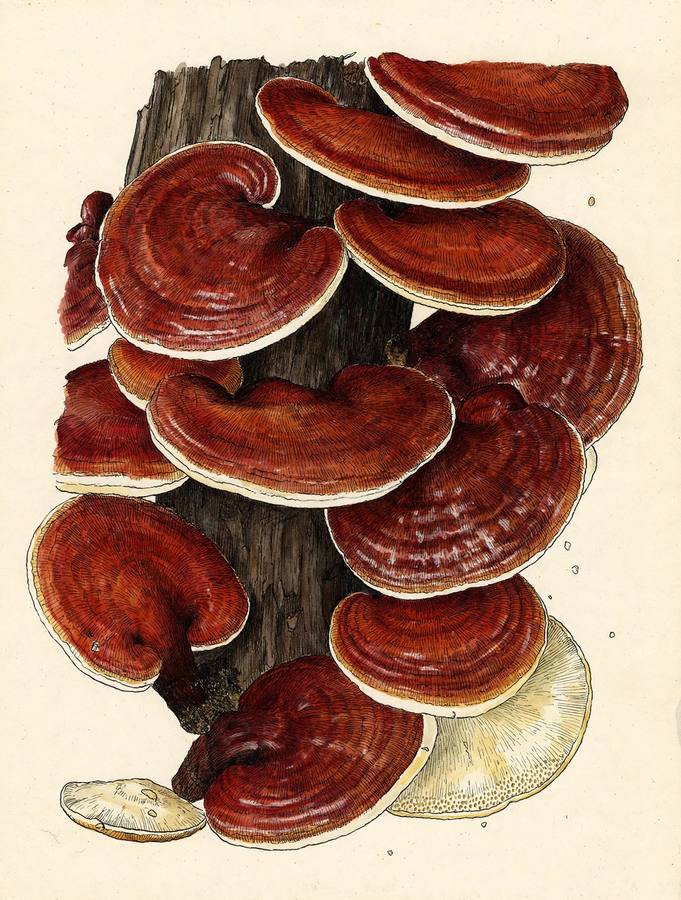
Illustration: Reishi mushroom (Ganoderma lucidum)
What it is and what it is used for
Reishi (Ganoderma lucidum), the varnished red-brown bracket fungus, used alongside conventional care — not as a cancer treatment. A 2016 Cochrane review (5 trials, 373 cancer patients) found that reishi with chemo/radiotherapy made patients 1.27× more likely to respond to treatment, improved immune markers and quality of life — but reishi alone shrank no tumors, trials were small and methodologically weak, and any survival benefit is unclear. A separate trial found reduced fatigue, anxiety, and depression in breast cancer patients at four weeks.
Safety and disclaimers
- Minor nausea or insomnia reported in trials.
- Caution with anticoagulants and blood-pressure drugs (additive effects plausible) — discuss with your clinician.
- Never delay or replace conventional treatment. Any use during illness belongs in a conversation with your medical team.
Foraging and preparing your ingredients
Warning: illustrations and photographs alone are never enough for safe wild identification. Confirm every plant in person with a knowledgeable local expert and at least two reliable field guides before harvesting or eating anything from the wild.
Where and when to find it: Dead hardwoods (oak, maple) in summer and autumn. Glossy varnished red-brown kidney-shaped brackets with a cream margin.
Identification: The varnished, lacquered look is diagnostic — like polished wood. White pore surface underneath bruises brown.
What to harvest: Cut young brackets with white growing margins.
Dangerous look-alikes: Artist's conk (Ganoderma applanatum) is duller, not varnished — also used traditionally and harmless. No dangerous look-alike.
Harvest sustainably: Cut, don't pull; abundant where hardwoods die.
Preparing and storing:
- Slice thin and dry at low heat (tough as wood when dry — slice fresh).
- Simmer 45–60 minutes for decoction; store dried slices sealed up to 2 years.
Recipe
Ingredients:
- Dried reishi slices (Ganoderma lucidum), 3–6 g
- 1 liter water
Preparation:
- Simmer 45–60 minutes into a bitter decoction; strain. Bitterness is normal — honey helps.
- Trials used extracts; this decoction is the traditional preparation.
Dosage / directions: One cup daily as a traditional tonic tea.
Folk history
For two thousand years, finding wild lingzhi was considered an omen of good fortune — emperors sent expeditions for it, artists painted it on silk. It was too rare for common use until cultivation made it ordinary. The modern trials did not confirm immortality, but they did find something real: people going through hard treatment felt somewhat better taking it.
Scientific references
- Cochrane 2016 — Ganoderma lucidum for cancer treatment (CD007731) — https://www.cochranelibrary.com/cdsr/doi/10.1002/14651858.CD007731.pub3/full