Natural Insect Repellents
Bugs are more than a nuisance in the backwoods — mosquitoes and ticks carry Lyme disease, ehrlichiosis, Rocky Mountain spotted fever, and West Nile virus. This chapter covers what actually works, ranked by the evidence, so tradition doesn't leave you exposed.
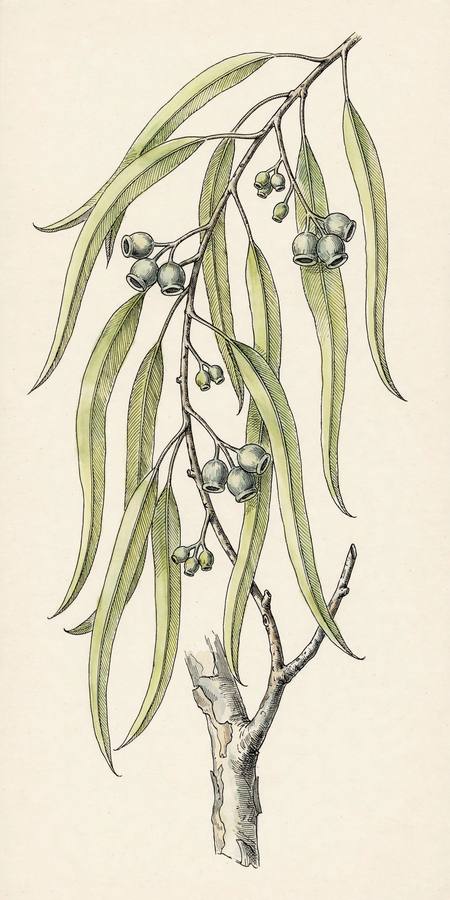
Illustration: Lemon-scented gum (Eucalyptus citriodora) branch
Oil of lemon eucalyptus (refined OLE / PMD) — the plant-based repellent that works
Refined oil of lemon eucalyptus (OLE), standardized to ~64% PMD (p-menthane-3,8-diol), is the only plant-based repellent the CDC lists alongside DEET and picaridin. Trials show 4–7 hours of protection against mosquitoes — comparable to low-concentration DEET. IMPORTANT DISTINCTION: raw lemon-eucalyptus essential oil is NOT the same thing — it is unrefined, unstandardized, and far less effective. Buy the refined OLE/PMD product and check the label for the PMD percentage.
- Apply per label; reapply after swimming or heavy sweating.
- Not for children under 3 (per most labels).
- The lemon scent is pleasant — the refined chemistry does the work.
Citronella — pleasant, but brief
Citronella oil (from Cymbopogon grasses) repels mosquitoes for about 20 minutes in trials — then it evaporates. Candles and wristbands perform even worse in studies. Use it for ambiance on the porch; do not rely on it in tick or heavy mosquito country.
- Reapply constantly if you insist on it.
- Do not substitute for OLE/PMD, picaridin, or DEET where disease vectors are active.
Permethrin for clothing — the tick killer
Permethrin 0.5% is applied to CLOTHING and gear, not skin. It kills ticks and mosquitoes on contact and survives multiple washings. In tick country, permethrin-treated pants and socks plus a skin repellent is the evidence-backed combination.
- Treat clothing outdoors and let dry fully before wearing.
- Toxic to cats while wet — keep treated gear from pets until dry.
- Re-treat after about 6 washings or per label.
Cover up and time it right
No repellent beats not being bitten: long sleeves and pants tucked into socks in tick habitat, light-colored clothing to spot ticks, and avoiding peak mosquito hours (dusk/dawn) near standing water. Do a full-body tick check — including hairline, armpits, and waistband — every evening in tick country.